Build
IoT Proof Of Concept
Get a working prototype on your own hardware that tests sensors, connectivity, and data flows against a real business case before you commit to a full rollout.


Ready when you are
Start a projectServices / What we do

Standardize your ecosystem to deliver secure, reliable, and interoperable IoT solutions.
Get a working prototype on your own hardware that tests sensors, connectivity, and data flows against a real business case before you commit to a full rollout.
We connect sensors, gateways and machines over BLE, Wi-Fi, LoRaWAN or NB-IoT, picking the network that fits your range and power needs, with MQTT for messaging.
Delivering IoT backends on AWS IoT Core or Azure IoT Hub, with X.509 device identity, over-the-air updates, time-series storage and stream processing that grow with your fleet.
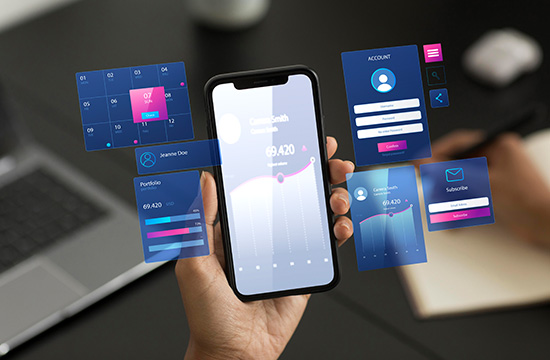
We build web dashboards and iOS and Android apps that show live readings, send alerts, and let your team control devices remotely, from any site.
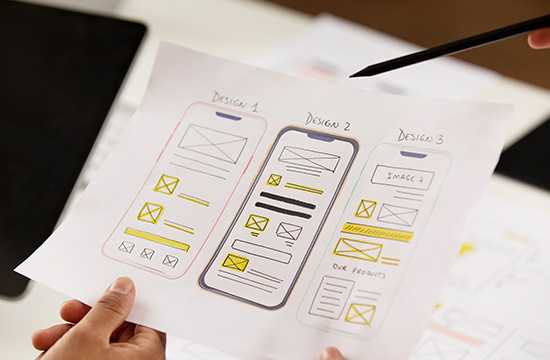
Offering integrations that feed device data into your ERP, CRM and billing systems, like the prepaid meters we connected to a city gas distribution ERP.

We use AI models trained on vibration, temperature, and usage data to flag anomalies and predict failures, so maintenance happens before breakdowns, with your engineers setting the thresholds.

Flexible ways to work with us, depending on your team.
Offering IoT engineers who work in two- to four-week sprints alongside your product team, delivering a working device-to-cloud slice each sprint.
A full-cycle team that takes your connected product from first prototype to launch, with testing built in from the start.
Providing long-term IoT engineers who work only on your platform, with Webmyne managing operations, legal and HR.
Adding cloud, mobile or data specialists for a pilot, rollout or platform migration, then scaling back when the work is done.
An agreed scope and budget for a defined pilot, prototype or device integration.
Monitoring your device fleet, rolling out over-the-air updates and tuning the platform as devices and sites grow.
Goals, users, current systems, constraints and success measures.
Scope, experience, architecture, roadmap and delivery priorities.
Iterative design, engineering, integration and stakeholder reviews.
Functional, usability, compatibility, performance and security checks.
Deployment, training, support, measurement and continuous improvement.
Building the software that connects physical devices to the internet and to each other: connectivity, cloud platforms, data pipelines, dashboards, apps and integrations, so sensor data turns into alerts, reports and automated actions.
One team covers the whole software stack: cloud, mobile apps, dashboards, AI and ERP integration. We have linked prepaid meters to a city gas distributor's ERP, and bring 20+ years of experience and CMMI Level 5 processes.
A proof of concept tests whether the idea works, usually with a few devices and a basic dashboard. An MVP is a first production version with real users, security and support, ready to grow into a full rollout.
AI finds patterns in sensor data that people miss, flagging anomalies, predicting equipment failures and forecasting demand. Models can run in the cloud or on edge devices for faster responses, with engineers setting the thresholds that trigger action.
In the EU, the Cyber Resilience Act requires manufacturers to report actively exploited vulnerabilities from 11 September 2026, with full requirements from 11 December 2027. The UK's PSTI rules have covered consumer connectable products since April 2024.
Yes. We work with your existing devices or hardware partner, connect them to the cloud and build the dashboards, apps and integrations around them. Where firmware changes are needed, we specify them with your hardware team.